
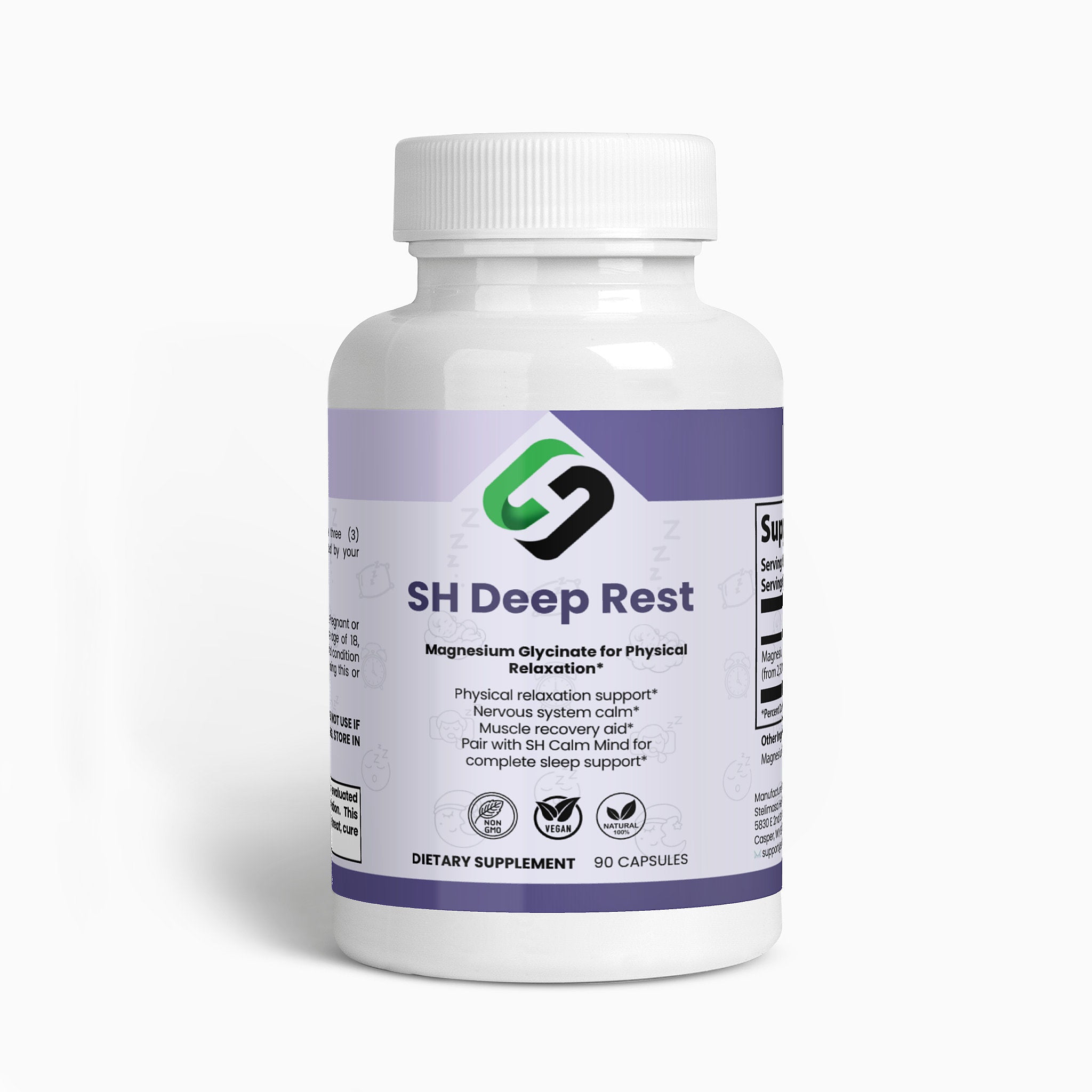



If you have been lying awake researching sleep supplements, you have probably come across magnesium glycinate. It is everywhere right now -- and for once, the hype has science behind it. This post breaks down what the research actually says, who it is most likely to help, and what to realistically expect.

Why Magnesium Matters for Sleep
Magnesium is involved in over 300 biochemical reactions in the body, and several of them directly influence how well you sleep. Nearly 50% of adults in the US may not be getting enough magnesium from their diet alone -- a gap that has real consequences for sleep quality.
Here is how magnesium supports sleep at a biological level:
- GABA activation. Magnesium helps regulate GABA (gamma-aminobutyric acid), the brain's primary inhibitory neurotransmitter. GABA is what helps your brain switch off at night. Low magnesium means lower GABA activity, which translates to a mind that keeps running when you want it to stop.*
- Melatonin regulation. Magnesium supports your body's natural production of melatonin, the hormone that signals it is time to sleep. Without adequate magnesium, this timing can shift, making it harder to feel sleepy at the right moment.*
- Cortisol control. Magnesium has an inhibitory effect on cortisol release. High evening cortisol is one of the most common reasons people feel wired but tired -- awake and exhausted at the same time.*
- Muscle relaxation. Magnesium is essential for muscle function and recovery. It helps release the physical tension that accumulates in your neck, shoulders, and jaw during a stressful day.*
Why Glycinate Specifically?
Not all forms of magnesium behave the same way in the body. Magnesium oxide has poor bioavailability. Magnesium citrate is better absorbed but has a mild laxative effect at higher doses. Magnesium glycinate is different -- it is bound to glycine, a calming amino acid that makes it both highly absorbable and uniquely suited to sleep support.
Glycine itself has independently studied sleep benefits. Research published in the journal Neuropsychopharmacology found that glycine lowers core body temperature -- one of the key biological triggers for sleep onset -- and reduces next-day fatigue. When you combine glycine's effects with magnesium's GABA and cortisol support, you get a compound that works on sleep through multiple pathways simultaneously.*

What Does the Research Show?
The clinical picture for magnesium glycinate and sleep has strengthened considerably in recent years. A 2025 randomized, placebo-controlled trial published in Nature and Science of Sleep found that adults with poor sleep quality who supplemented with magnesium bisglycinate reported meaningful improvements in insomnia symptoms. Participants with the lowest dietary magnesium intake showed the strongest response.
A systematic review and meta-analysis of randomized controlled trials found that magnesium supplementation reduced sleep onset latency by approximately 17 minutes compared to placebo. For people who regularly spend 20 to 40 minutes lying awake before falling asleep, that is a meaningful reduction.
A separate double-blind crossover study found that magnesium supplementation significantly increased slow-wave sleep -- the deep, restorative stage -- and produced measurable drops in evening cortisol levels.
Who Is Most Likely to Benefit?
The evidence consistently points to one pattern: people who are magnesium deficient benefit the most. Given that nearly half of American adults fall into this category, that is a large group. You are more likely to be deficient if you eat a diet low in leafy greens, nuts, seeds, and whole grains; experience high levels of chronic stress; drink alcohol regularly; or are over 50, as absorption declines with age.
What to Realistically Expect
Magnesium glycinate is not a sedative. It does not knock you out. What most people notice over two to four weeks of consistent use is a gradual shift -- falling asleep more easily, waking less during the night, and feeling more physically relaxed at bedtime. Some people report vivid dreams in the first one to two weeks as glycine influences sleep architecture. This is normal and typically settles.
The key word is consistent. Magnesium glycinate builds in your system. Taking it nightly for 30 days while maintaining a reasonable sleep routine gives you the best chance of a meaningful result.

How to Take It
Most clinical studies use doses between 250mg and 400mg of elemental magnesium daily. Note that the label weight on a product is the weight of the compound, not the elemental magnesium content -- so read the supplement facts panel carefully. Look for the elemental magnesium figure. Take it with dinner or one to two hours before bed. Magnesium absorbs better with food and the timing gives your body a chance to begin the relaxation process before you lie down.
*These statements have not been evaluated by the Food and Drug Administration. This product is not intended to diagnose, treat, cure, or prevent any disease.
