


Hormone-Balancing Foods: Your Essential Nutrition Guide for Women’s Wellness
Last Updated: [Current Date] • Reading Time: ~8 minutes
Your hormones influence everything from energy and mood to sleep and metabolism. While stress, sleep, and movement matter, one of the most powerful tools sits right on your plate. The foods you choose provide the raw materials your body needs to produce, regulate, and clear hormones. Below is a friendly, practical guide to the nutrients and foods that can help ease PMS, smooth the perimenopause transition, and support balance at every life stage.
Jump to: Food–Hormone Connection • The Big Four Nutrients • Build Your Plate • Sample Day • Foods to Limit • Lifestyle Boosters • When Food Isn’t Enough • Action Plan • FAQ
Understanding the Food–Hormone Connection
Your body needs nutrients to:
- Produce hormones (made from proteins and fats)
- Transport hormones through the bloodstream
- Activate hormone receptors inside cells
- Metabolize & eliminate excess hormones
- Protect hormone-producing glands from oxidative stress
When key nutrients are missing, production may slow, signaling can stumble, and elimination can lag—often showing up as tougher PMS, perimenopause swings, or low-mood/fatigue. The good news: adding nutrient-rich foods consistently makes a meaningful difference.
The Big Four: Essential Nutrients for Hormonal Balance
1) Phytoestrogens (Plant-Based Hormone Support)
What they are: Gentle plant compounds (lignans & isoflavones) that interact with estrogen receptors. They can help buffer highs and support lows—especially helpful across the cycle and during menopause.
Best food sources: Ground flaxseed, sesame seeds, soy foods (tofu, tempeh, edamame), chickpeas, lentils.
Easy ways to use: Add 1–2 Tbsp ground flax to smoothies or oats; toss edamame into salads; try tofu stir-fries or tempeh.
Note: Research supports moderate intake of whole soy foods for most people. If you have specific medical questions, speak with your healthcare provider.
2) Magnesium (The Calming Mineral)
Involved in 300+ reactions—key for stress response and hormone synthesis.
- Why it helps: Supports cortisol regulation, promotes relaxation (GABA), may reduce cramps and mood shifts, improves sleep, supports progesterone.
- Signs you may need more: Muscle twitches, poor sleep, low mood/anxiety, intense PMS, headaches, chocolate cravings.
- Food sources: Pumpkin seeds, spinach/leafy greens, almonds, black beans, avocado, dark chocolate (70%+), whole grains.
- Daily target: ~310–320 mg for women.
3) Omega-3 Fatty Acids (Anti-Inflammatory Powerhouses)
These essential fats help build hormones and cell membranes and support a healthy inflammatory response.
- Benefits: May reduce menstrual cramps, support mood/brain health, improve insulin sensitivity, and help some women with hot flashes.
- EPA/DHA fish sources: Salmon, sardines, mackerel, herring, anchovies.
- ALA plant sources: Chia, ground flax, hemp, walnuts.
- Target: 2–3 servings fatty fish weekly (≈250–500 mg EPA/DHA daily) or prioritise ALA sources if plant-based.
4) Vitamin D + Calcium (The Bone-Health Duo with Hormone Roles)
-
Vitamin D: Acts like a hormone, supports mood and immune function, influences sex-hormone pathways, and insulin sensitivity.
Sources: Fatty fish, egg yolks, UV-exposed mushrooms, fortified milk/plant milk, sensible sunlight. -
Calcium: Bone strength, muscle function, and may aid PMS comfort.
Sources: Dairy, sardines (with bones), tofu (calcium-set), kale, bok choy, collards, fortified plant milks, almonds. - Daily targets: Vitamin D 600–800 IU (individual testing may guide), Calcium 1,000–1,200 mg.
Build Your Hormone-Balancing Plate
The ¼–¼–½ Method:
- ¼ Protein: Salmon, sardines, tofu/tempeh, lentils, chickpeas, eggs.
- ¼ Complex Carbs: Quinoa, brown rice, oats, sweet potato.
- ½ Vegetables: Leafy greens (magnesium, calcium) + crucifers (support estrogen metabolism) + colourful variety.
Add healthy fats: Avocado, olive oil, nuts, seeds.
Don’t forget fibre: Aim for 25–35 g/day to help clear excess hormones (veg, fruit, whole grains, legumes).
Sample Day of Hormone-Balancing Meals
- Breakfast — Hormone-Harmony Smoothie Bowl: Greek yogurt + banana + spinach + ground flax + chia. Top with walnuts, pumpkin seeds, and a few dark-chocolate chips. Why: phytoestrogens, omega-3s, magnesium, calcium.
- Snack: Energy bites (dates, almond butter, oats, hemp seeds). Why: steady energy, magnesium, omega-3s.
- Lunch — Salmon & Quinoa Power Bowl: Quinoa, kale/greens, salmon, chickpeas, avocado, sesame, lemon-tahini. Why: omega-3s, phytoestrogens, magnesium, calcium.
- Snack: 1–2 squares dark chocolate (70%+) + handful of almonds. Why: magnesium, healthy fats.
- Dinner — Tofu Stir-Fry with Bok Choy: Tofu, bok choy, mushrooms, ginger/garlic over brown rice; sprinkle sesame. Why: phytoestrogens, calcium, vitamin D (mushrooms), fibre.
- Evening: Chamomile or passionflower tea. Why: supports relaxation and sleep.
Foods to Limit for Hormonal Health
- Excess sugar & refined carbs → insulin spikes; can worsen PMS/inflammation.
- Alcohol → interferes with estrogen metabolism; disrupts sleep.
- Excess caffeine → may elevate cortisol; mind anxiety/sleep.
- Trans fats & ultra-processed foods → promote inflammation; low nutrient density.
- Dairy sensitivity (for some) → trial organic/A2 or plant alternatives.
Beyond Food: Lifestyle Factors That Matter
- Regular movement (strength + moderate cardio + yoga/Pilates)
- 7–9 hours quality sleep; consistent schedule
- Stress care: breathwork, nature time, hobbies, social connection
- Hydration; gut health via fibre & fermented foods
- Lower toxin exposure (glass storage, choose organic when feasible)
When Food Isn’t Enough
If uncomfortable symptoms persist—or you’re navigating perimenopause/menopause—targeted nutrients can help. Choose supplements that are third-party tested, use bioavailable forms, and are made in GMP-certified facilities.
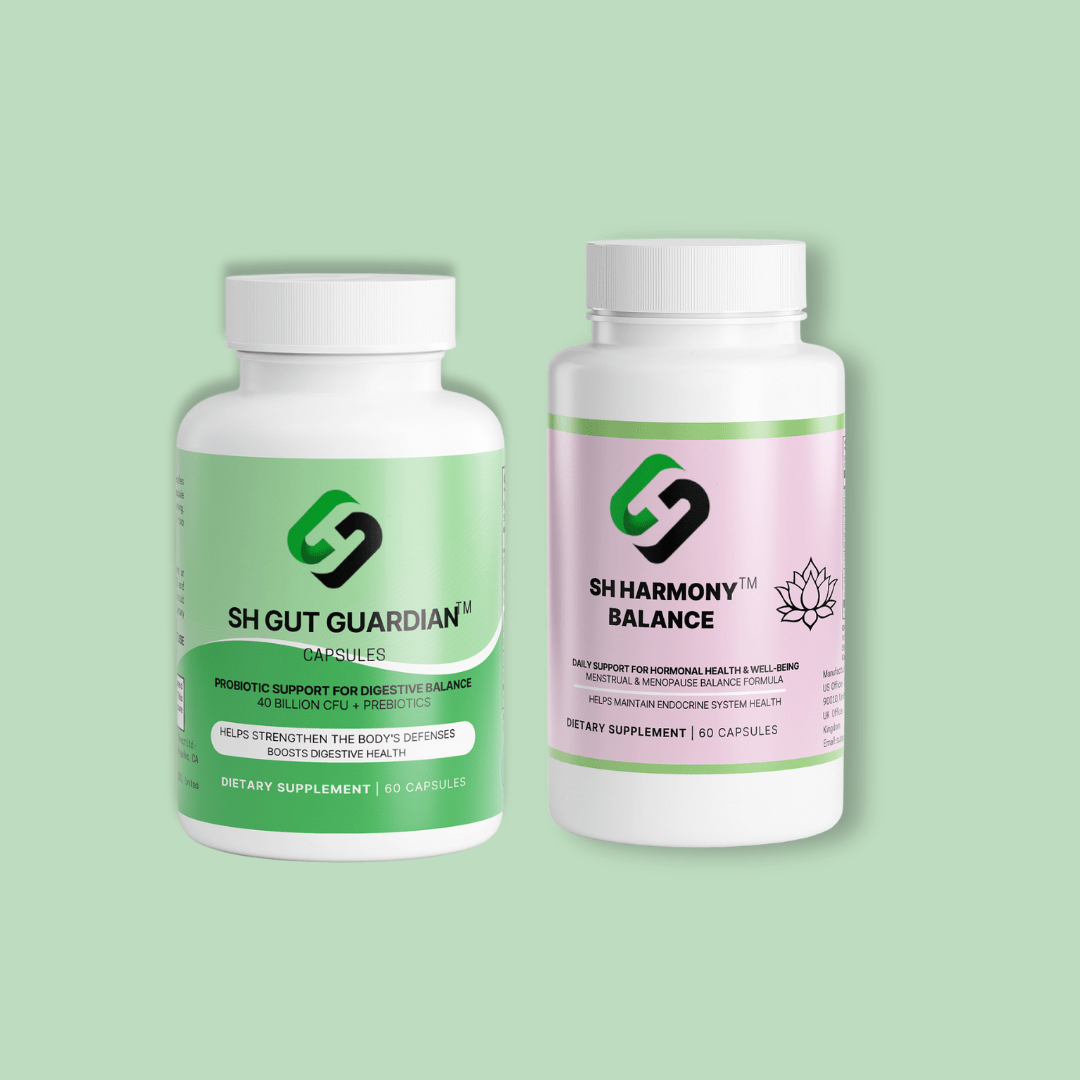
Meet SH Harmony Balance
A thoughtful, non-GMO blend designed to complement a hormone-friendly diet—supporting PMS comfort, a smoother perimenopause transition, and everyday balance.
Your Action Plan: Start This Week
- Add one daily: 1–2 Tbsp ground flax or 1 cup leafy greens or 2–3 oz fatty fish / 1 Tbsp chia or fortified yogurt/plant milk.
- Build your plate: ¼ protein • ¼ complex carbs • ½ veg + healthy fats + fibre.
- Prep ahead: Batch grains/proteins; stock nuts, seeds, yogurt, greens.
- Track for 4–6 weeks: Energy, mood, sleep, PMS changes; adjust as you learn.
- Be patient: Big shifts often appear over 2–3 cycles.
Frequently Asked Questions
How long before I notice a difference?
Some women notice energy and mood improvements within 2–3 weeks. Larger hormonal shifts typically appear across 2–3 menstrual cycles.
Do I need to eat all these foods every day?
No—aim for variety across the week. Keep staples like flax, leafy greens, fatty fish or ALA seeds in regular rotation.
What if I’m vegetarian or vegan?
You can meet needs with flax/chia/hemp/walnuts (omega-3 ALA), soy/legumes (protein & phytoestrogens), and fortified plant milks (calcium & vitamin D).
Can men benefit too?
Absolutely. These nutrient-dense foods support overall health for everyone.
Are organic foods necessary?
Helpful where possible (especially the “Dirty Dozen”), but eating conventional produce is still beneficial. Do your best within your budget.
Continue Your Hormonal Wellness Journey
- Hormonal Health Questions Answered: Your Complete Q&A Guide
- Understanding Your Menstrual Cycle Phases
- Natural PMS Relief Strategies
- The Perimenopause Survival Guide
Disclaimer
This article is educational and not medical advice. It does not diagnose, treat, cure, or prevent disease. Always consult your healthcare provider before major dietary changes or starting supplements—especially if pregnant, nursing, on medication, or with medical conditions.
About Stelimasa Health
We’re passionate about empowering women with practical, natural tools. The SH Natural Harmony Series is crafted to complement a nutrient-dense lifestyle at every stage. Explore Women’s Wellness →

