


Hormones influence energy, mood, sleep, metabolism—and how you feel day to day. If you’re navigating monthly cycles, perimenopause, or menopause, this guide gives clear, easy-to-scan answers and practical steps you can start today.
Understanding Hormones: The Basics
What are hormones and why do they matter?
Hormones are chemical messengers made by your endocrine glands. They travel through the bloodstream and coordinate key body functions—your body’s “internal Wi-Fi.”
Key hormones
- Estrogen – cycles, bone health, mood
- Progesterone – calm mood, prepares for pregnancy
- Testosterone – energy, muscle tone, libido
- Cortisol – stress response, impacts sleep/energy
- Thyroid hormones – metabolism, energy
- Insulin – blood sugar regulation
What causes hormonal imbalances?
- Chronic stress & poor sleep
- Nutrient gaps
- Sedentary lifestyle
- Blood sugar swings
- Environmental exposures
- Life transitions (peri/menopause)
Menstrual Cycle: What’s “normal”?
- Cycle length: 21–35 days
- Period: 3–7 days, moderate flow
- Common symptoms: mild cramps, slight mood shifts, breast tenderness
See a doctor if: cycles <21 or >35 days, very heavy bleeding, severe pain, bleeding between periods, or >=3 missed periods (not pregnant).
Why you feel different across your cycle
1) Menstrual (Days 1–5)
Lower energy; prioritise rest, iron-rich foods, gentle movement.
2) Follicular (Days 6–14)
Estrogen rises; energy/creativity increase; try new projects & training.
3) Ovulation (~Day 14)
Peak energy, confidence, communication—book key meetings.
4) Luteal (Days 15–28)
Progesterone rises then drops; prioritise self-care, magnesium, stress tools.
Natural ways to ease PMS
Nutrition
- Magnesium foods: spinach, pumpkin seeds, dark chocolate
- Omega-3s: salmon, walnuts, chia
- B vitamins: whole grains, leafy greens, legumes
- Hydrate; reduce salt & caffeine
Lifestyle
- Regular exercise
- Stress management
- Consistent sleep
- Limit alcohol
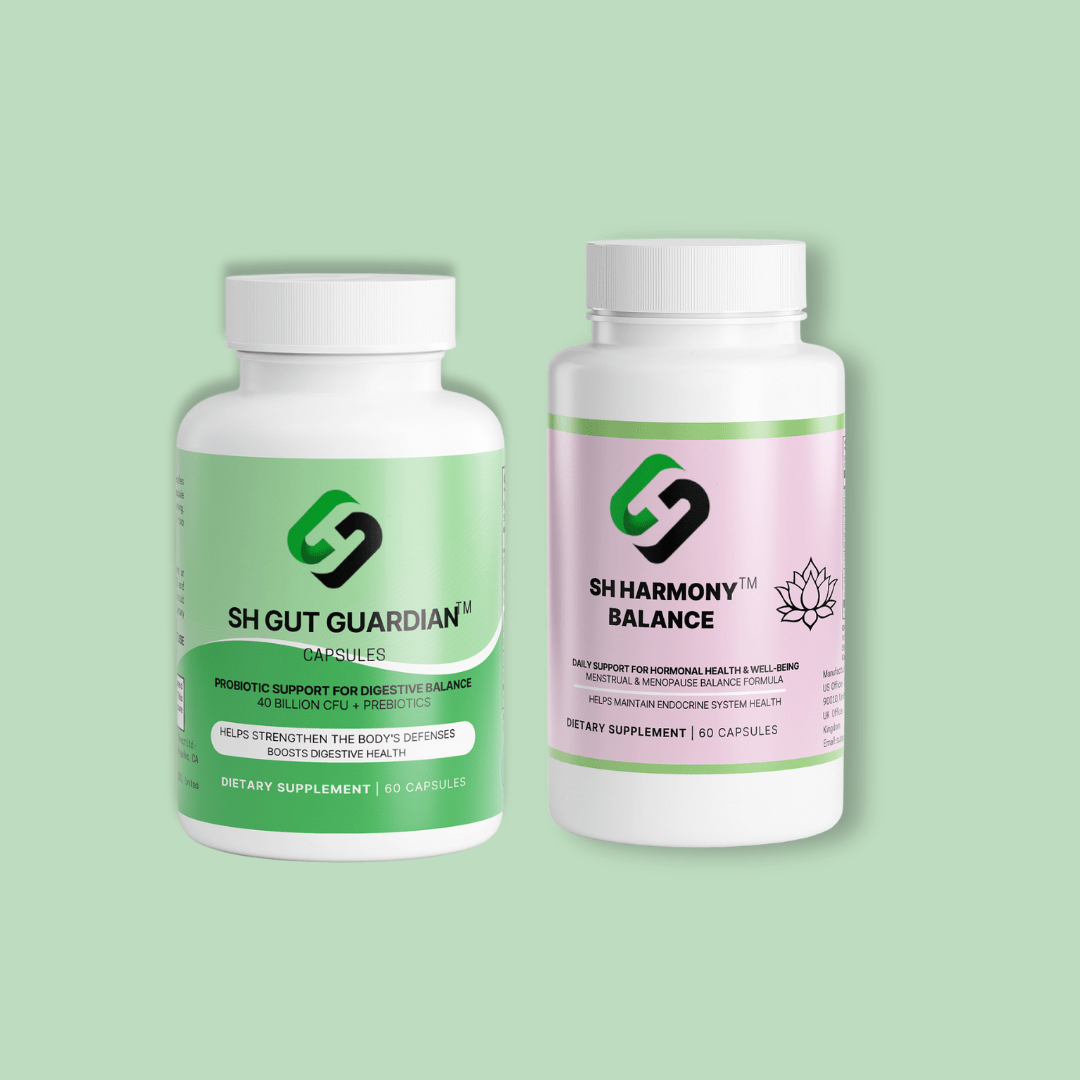
Targeted support can help. SH Harmony Balance is formulated to support menstrual comfort and overall well-being.
Perimenopause & Menopause—what to expect
Perimenopause
- Begins typically in 40s; lasts 4–8 years
- Irregular ovulation, fluctuating hormones
- Symptoms: hot flashes, sleep/mood changes, irregular periods
Menopause & Postmenopause
- Menopause: 12 months after last period (avg age 51)
- Postmenopause: symptoms often stabilise; focus on bone/heart health
Natural relief ideas
- Hot flashes: cool room, layers, hydrate, identify triggers
- Sleep: steady schedule, dark/cool room, consider magnesium
- Mood: movement, omega-3s, B vitamins, mindfulness, connection
- Bone health: strength work, calcium + vitamin D, protein
- Vaginal dryness: stay sexually active, water-based lubricants
- Comprehensive support: Many find SH Harmony Balance helpful during this transition.
Can stress really disrupt hormones?
Yes. Chronic stress keeps cortisol high, which can disturb cycles, thyroid, blood sugar, sleep, and digestion.
Why it matters
Your body prioritises survival over reproduction. Persistently high cortisol can suppress sex-hormone production.
Try this
- Daily movement (even 10 minutes)
- Breathwork; time in nature
- 7–9 hours sleep
- Creative hobbies & social time
- Consider adaptogens (e.g., ashwagandha)
Foods that support hormonal health
- Crucifers: broccoli, cauliflower, Brussels sprouts
- Healthy fats: avocado, olive oil, nuts, seeds, fatty fish
- Fibre-rich: veg, fruit, whole grains, legumes
- Quality protein: fish, poultry, eggs, legumes, Greek yogurt
- Probiotic foods: yogurt, kefir, sauerkraut, kimchi
- Phytoestrogens: flax, soy, lentils, chickpeas
- Limit excess sugar & ultra-processed foods
- Limit alcohol; avoid trans fats
Do you need supplements?
Food first—then add targeted support when needed (PMS, peri/menopause, high stress, or confirmed nutrient gaps).
- Magnesium, B-vitamins, vitamin D
- Omega-3s; plant phytonutrients
- Choose third-party tested, bioavailable forms, GMP-made
Formulated for women: SH Harmony Balance combines thoughtfully selected nutrients to support menstrual comfort and menopause well-being.
Sleep & hormones
Poor sleep can elevate cortisol, reduce growth hormone release, alter hunger hormones (leptin/ghrelin), impair insulin sensitivity, and disturb cycle regularity.
Better-sleep checklist
- Consistent bed/wake times
- Bedroom 16–19°C (60–67°F), very dark
- No screens 1–2 hrs before bed
- Wind-down routine; magnesium-rich snack
- Consider gentle support like SH Night Reset
Exercise for hormonal balance
- Reduces excess estrogen & cortisol
- Improves insulin sensitivity & thyroid support
- Boosts mood, sleep, and healthy weight
- Strength training 2–3×/week
- Moderate cardio 3–5×/week (walk, cycle, swim)
- Yoga/Pilates 2–3×/week
Balance is key—excess high-intensity work can raise cortisol for some.
When to see a healthcare provider
- Very heavy/painful/irregular periods or ≥3 missed periods
- Severe PMS impacting daily life
- Marked mood changes; extreme fatigue
- Hot flashes before 40; fertility concerns
- Unexplained weight change; hair loss/excess facial hair
- Persistent digestive issues; no improvement with lifestyle steps
Your clinician can order labs, rule out conditions (e.g., PCOS, thyroid issues, endometriosis), and discuss therapies if appropriate.
Your Hormonal Health Action Plan
This week
- Track cycle & symptoms
- Add one crucifer daily
- Fix bedtime/wake time
- 5 minutes of deep breathing
This month
- Strength train 2×/week
- Reduce added sugar/ultra-processed foods
- Schedule de-stress activities
- Consider targeted supplementation
Support your journey
SH Harmony Balance is non-GMO and thoughtfully formulated to support women’s hormonal wellness across life phases.
Shop SH Harmony Balance →Frequently Asked Questions
How long does it take to balance hormones naturally?
Many notice improvements in 2–4 weeks; deeper changes often take 3–6 months. Consistency matters.
Can birth control affect natural hormonal balance?
Hormonal contraceptives use synthetic hormones that override the natural cycle. Helpful for some, side effects for others—discuss with your doctor.
Are hormone replacement therapies safe?
Bioidentical HRT can be safe and effective for many during menopause. It’s a personalised decision with your clinician.
Do men get hormonal imbalances?
Yes—testosterone declines with age and men can have thyroid, cortisol, and insulin issues. Hormonal health matters for everyone.

